Best Management Practices for Non-Agricultural Irrigation
Turfgrass managers that implement jurisdiction approved water conservation measures and follow developed generally accepted or best management practices for all withdrawals exhibit due diligence for their withdrawal responsibilities and should be considered in compliance with conservation measure and ecological impact application requirements. As part of our responsibility to engage the turfgrass industry in water conservation, the Michigan Turfgrass Foundation has coordinated the development of Best Management Practices for Non-Agricultural Irrigation. We are now distributing this document for review and adoption to turfgrass educators, associations and foundations in the other states within the Great Lakes Basin. We ask that this document be explicitly acknowledged within the implementing agreements as the basis for turfgrass managers and other non-agricultural irrigators to meet the water conservation measures in the agreements. Attainment of due diligence is not intended to allow a turfgrass manager an unreasonable use of water but to acknowledge the attainment of a performance based standard and good faith effort in the event the use is scientifically found to be seriously contributing to an ecological impact.
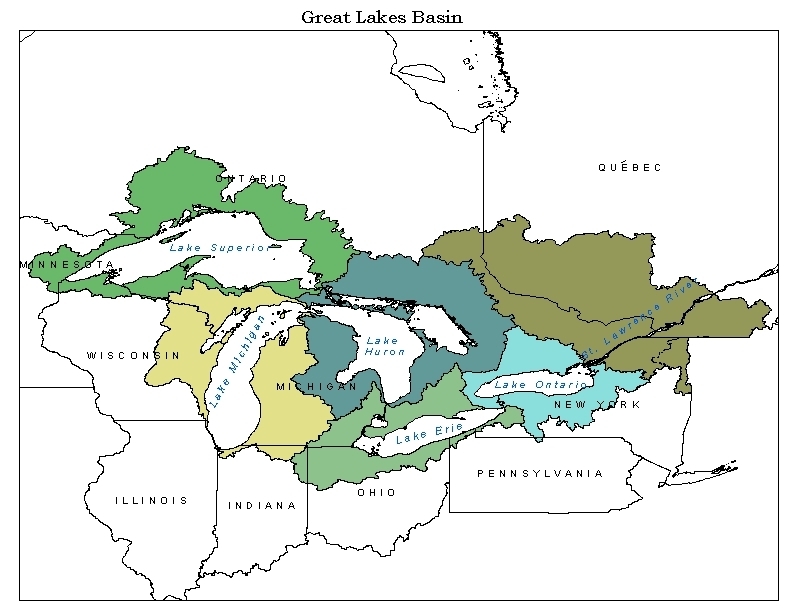
Great Lakes Basin Map
BMP's for Non-Agricultural Irrigation
Measuring Consumptive Use
Great Lakes Consumptive Use
Agricultural Withdrawals
Golf Course Withdrawals
Industrial Withdrawals
Public Withdrawals
Total Withdrawals
Large Great Lakes Basin Map (JPG)
Conservation and Protection of Michigan’s Ground and Surface Water
September 22, 2005 (3rd draft)
This document is designed to provide comment and make recommendations on behalf of the turfgrass industry in Michigan on the conservation and protection of Michigan’s ground and surface water resources. It provides information that clearly demonstrates the ways in which the turf industry is actively contributing to the improved management of these resources and Michigan’s economy.
The turfgrass industry in Michigan directly contributes $1.86 billion annually to Michigan’s economy and employs 30,000 people. This does not include indirect impact and employment related to tourism, sporting events and recreation and leisure activities that result from maintained turfgrass. Access to quality water in appropriate quantity is critical to the continued economic vitality and growth of the turf industry in Michigan. This industry impacts every county in the state and spans the rural, suburban and urban diversity and demographics of Michigan.
The Michigan Turfgrass Foundation (MTF) is active in water policy and legislative issues that affect the turfgrass industry. MTF Executive Director Tom Smith serves on the Michigan Department of Environmental Quality Water Policy Workgroup, chairs the Non-Agricultural Irrigator Subcommittee, and chairs the Steering Committee of the Michigan Turfgrass Environmental Stewardship Program (MTESP). MTF-member Craig Hoffman, Golf Course Superintendent at The Rock and President of the Northern Michigan Turf Managers Association, serves on the Ground Water Conservation Advisory Council. These examples represent just a small part of the engagement in key issues by members of the turf industry in Michigan.
Irrigation technology is proceeding rapidly within the green industry. Moisture sensing technology, computerized climate based irrigation programming, improved application techniques, as well as many other improvements can lead to very efficient water use in landscape and turf. Improvements include: heads that shut themselves off if they are broken; pressure regulation to minimize offsite drift; controllers that shut themselves off and notify personnel if a line or head break is detected; inexpensive rain sensors; improved nozzle distribution uniformity; and computer modeled layouts. Our industry is committed to expanded use of new technology that will conserve water.
Water is a precious resource, and the turfgrass industry in Michigan has implemented a number of proactive, voluntary programs and initiatives to conserve and protect this resource. Many of these programs include key partnerships with Michigan State University, Michigan Department of Agriculture, and Michigan Department of Environmental Quality. Additional industry partners include the Michigan Golf Course Owners Association, Michigan Nursery & Landscape Association, the Michigan Green Industry Association and the donor groups listed below in the MTF Background. In all cases, these programs and initiatives have resulted from proactive beliefs, ideas, activities and interests of the turf industry, not from a legislative mandate. Some of these programs and initiatives include:
(1) The Michigan Turfgrass Environmental Stewardship Program (MTESP), an award winning program with funding from the Groundwater Protection Fund designed to:
(3) Irrigation and Water Conservation Module for the MTESP, based on the BMP’s, is currently under development by MTESP program staff with partial funding from GREEEN.
(4) And just released this spring, the Michigan Turfgrass Stewardship Initiative (MTSI), a long-range and comprehensive vision and commitment of the turf industry to achieve the following broad environmental and social goals.
These comments and suggestions are made within the extensive framework of proactive water conservation and environmental stewardship of the turf industry outlined above.
MTF Background
The MTF is a non-profit foundation whose mission is to support turfgrass research, teaching and outreach through grants and scholarships at Michigan State University (MSU). MTF research and support grants total about $150,000 annually and approximately $10,000 in scholarships is provided to students.
The MTF is supported through donations by a variety of turfgrass organizations in the state including: Greater Detroit Golf Course Superintendents Association; Mid-Michigan Turf Association; Michigan Irrigation Association; Michigan Sod Growers Association; Michigan Sports Turf Managers Association; Northern Michigan Turf Managers Association; Western Michigan Golf Course Superintendents Association; and the West Michigan Turf Association. We also receive significant donations from the Golf Association of Michigan and its member clubs.
The turfgrass industry in Michigan further supports the research program at the Hancock Turfgrass Research Center, a 60 acre facility on the campus of MSU, by supplying almost $500,000 in equipment and materials annually to help operate this world class facility.
Case Studies: Here are just three examples of turf managers who have gone the next step to conserve and protect our water resources:
The Lochmoor Club
Mike Jones, Certified Golf Course Superintendent at The Lochmoor Club in Grosse Pointe Woods first promoted, then implemented, a large scale and innovative storm water management plan that created a series of retention ponds on the golf course that handle the site’s drainage. He has subsequently tied some surrounding properties into this system and is now negotiating with the City of Grosse Pointe Woods to handle some of their storm water from roads and streets. This project has modified the originally proposed engineered storm water management plan to pipe the untreated storm water directly into Lake St. Clair. Over 20 million gallons of storm water is now naturally filtered in the retention ponds and further polished when used to irrigate the turf at Lochmoor, percolating through the soil to recharge the aquifer. This storm water collection system supplies up to 80% of the water needed for irrigation on the golf course. This project has allowed the city to more easily comply with their Phase II Storm Water compliance, saving them money and conserving water.
Groesbeck Golf Course
Ingham County Drain Commissioner Patrick Lindemann designed and oversaw construction of the Tollgate Drain System that created a community wetland park and modified Groesbeck Golf Course, the City of Lansing’s premier municipal golf course, into a storm water detention system and wildlife sanctuary. This project was one-third of the cost of the traditional underground piping system first proposed to handle the neighborhood’s sewer separation project. In addition to handling the storm water and creating significant wildlife habitat in an urban setting, the golf course re-design improved and added interest to the already popular golf course, thereby enhancing revenue for the city.
Forest Dunes Golf Club
Jim Bluck, Certified Golf Course Superintendent at Forest Dunes Golf Club in Roscommon, MI oversees bi-annual testing of five monitoring wells to ensure that groundwater is not impacted. Buffer strips are used on the course, maintained turf is minimized, and extensive areas of native vegetation were part of the project design and continue to be managed and improved today. A state of the art maintenance facility incorporates the latest in equipment washing and rinsing technology to recover, cleanse and re-use rinse water and protect the groundwater from contamination.
Golf courses find a way to conserve water
Large Map Great Lakes Basin
Ground and Surface Water Resource
Digital Watershed Hints
Turfgrass managers that implement jurisdiction approved water conservation measures and follow developed generally accepted or best management practices for all withdrawals exhibit due diligence for their withdrawal responsibilities and should be considered in compliance with conservation measure and ecological impact application requirements. As part of our responsibility to engage the turfgrass industry in water conservation, the Michigan Turfgrass Foundation has coordinated the development of Best Management Practices for Non-Agricultural Irrigation. We are now distributing this document for review and adoption to turfgrass educators, associations and foundations in the other states within the Great Lakes Basin. We ask that this document be explicitly acknowledged within the implementing agreements as the basis for turfgrass managers and other non-agricultural irrigators to meet the water conservation measures in the agreements. Attainment of due diligence is not intended to allow a turfgrass manager an unreasonable use of water but to acknowledge the attainment of a performance based standard and good faith effort in the event the use is scientifically found to be seriously contributing to an ecological impact.
Great Lakes Basin Map
BMP's for Non-Agricultural Irrigation
Measuring Consumptive Use
Great Lakes Consumptive Use
Agricultural Withdrawals
Golf Course Withdrawals
Industrial Withdrawals
Public Withdrawals
Total Withdrawals
Large Great Lakes Basin Map (JPG)
Conservation and Protection of Michigan’s Ground and Surface Water
September 22, 2005 (3rd draft)
This document is designed to provide comment and make recommendations on behalf of the turfgrass industry in Michigan on the conservation and protection of Michigan’s ground and surface water resources. It provides information that clearly demonstrates the ways in which the turf industry is actively contributing to the improved management of these resources and Michigan’s economy.
The turfgrass industry in Michigan directly contributes $1.86 billion annually to Michigan’s economy and employs 30,000 people. This does not include indirect impact and employment related to tourism, sporting events and recreation and leisure activities that result from maintained turfgrass. Access to quality water in appropriate quantity is critical to the continued economic vitality and growth of the turf industry in Michigan. This industry impacts every county in the state and spans the rural, suburban and urban diversity and demographics of Michigan.
The Michigan Turfgrass Foundation (MTF) is active in water policy and legislative issues that affect the turfgrass industry. MTF Executive Director Tom Smith serves on the Michigan Department of Environmental Quality Water Policy Workgroup, chairs the Non-Agricultural Irrigator Subcommittee, and chairs the Steering Committee of the Michigan Turfgrass Environmental Stewardship Program (MTESP). MTF-member Craig Hoffman, Golf Course Superintendent at The Rock and President of the Northern Michigan Turf Managers Association, serves on the Ground Water Conservation Advisory Council. These examples represent just a small part of the engagement in key issues by members of the turf industry in Michigan.
Irrigation technology is proceeding rapidly within the green industry. Moisture sensing technology, computerized climate based irrigation programming, improved application techniques, as well as many other improvements can lead to very efficient water use in landscape and turf. Improvements include: heads that shut themselves off if they are broken; pressure regulation to minimize offsite drift; controllers that shut themselves off and notify personnel if a line or head break is detected; inexpensive rain sensors; improved nozzle distribution uniformity; and computer modeled layouts. Our industry is committed to expanded use of new technology that will conserve water.
Water is a precious resource, and the turfgrass industry in Michigan has implemented a number of proactive, voluntary programs and initiatives to conserve and protect this resource. Many of these programs include key partnerships with Michigan State University, Michigan Department of Agriculture, and Michigan Department of Environmental Quality. Additional industry partners include the Michigan Golf Course Owners Association, Michigan Nursery & Landscape Association, the Michigan Green Industry Association and the donor groups listed below in the MTF Background. In all cases, these programs and initiatives have resulted from proactive beliefs, ideas, activities and interests of the turf industry, not from a legislative mandate. Some of these programs and initiatives include:
(1) The Michigan Turfgrass Environmental Stewardship Program (MTESP), an award winning program with funding from the Groundwater Protection Fund designed to:
- Strengthen linkages among the turfgrass industry, governmental agencies, MSU and environmental and wildlife advocacy groups.
- Promote voluntary implementation of pollution prevention strategies, environmental risk reduction, and wildlife habitat enhancement practices within the turfgrass industry.
- Clearly identify environmental laws and regulations impacting the turfgrass industry and promote industry compliance with those laws and regulations.
- Build recognition for environmentally sound turfgrass management.
(3) Irrigation and Water Conservation Module for the MTESP, based on the BMP’s, is currently under development by MTESP program staff with partial funding from GREEEN.
(4) And just released this spring, the Michigan Turfgrass Stewardship Initiative (MTSI), a long-range and comprehensive vision and commitment of the turf industry to achieve the following broad environmental and social goals.
- Turf to protect our environment
- Turf to teach our children and youth
- Turf to create jobs
- Turf as a sensible and functional land use option
- In 1990, with the urging of the turf industry, MSU was the first university in the country to hire a Turfgrass Environmental Specialist.
- The longest running turfgrass nutrient fate study in the country began at MSU in the late 1980’s. That study continues today and now includes research on both nitrogen fate and phosphorus fate, addressing key nutrient issues for both ground and surface water. The MTF has contributed financial support for this work since its inception.
- The MTESP was the first environmental stewardship program for golf courses in the country. This program started in 1998 at the urging of the golf industry and continues to expand today in members and scope. It is considered a national model.
- Golf courses have been reporting water use to the MDEQ since the 1990’s and reporting compliance annually approaches 99%.
These comments and suggestions are made within the extensive framework of proactive water conservation and environmental stewardship of the turf industry outlined above.
- Clearly, one size will not fit all water users. Dissimilar water users should be treated as such, and risk, regulatory options and conservation practices should be developed within each industry segment that uses water.
- Is legislation needed? Water resources, while abundant in Michigan, do vary considerably in their quantity, quality and, if utilized, potential impact on water dependent natural resources. For these reasons, regulations should be based both on the type of withdrawal and on the potential risk to natural resources.
- Proposed language for water use legislation in Michigan has consistently focused only on withdrawal. This is, at best, one-half of the equation. Last spring, from early May to mid-June, golf courses and other turfgrass areas did not require irrigation because they were flooded from record setting rains. This rain did not run off a contaminated parking lot into a storm sewer then out to a creek, stream or river. Green spaces like golf courses, athletic fields, parks and school grounds function as recharge areas for the underlying aquifer and as sediment traps, flood control, and erosion control for surface waters. Any legislation should take a water balance approach and give credit for those systems like golf courses that absorb rainfall, and allow percolation through the soil system that naturally filters storm water and provides recharge of ground and surface waters.
- There are numerous proactive, voluntary programs and initiatives implemented by the turf industry in Michigan. We are currently conserving water and protecting this resource outside of a regulatory framework. There should be an incentive for these types of programs in the form of regulatory relief, streamlined permitting or other inducements that would encourage the development of voluntary efforts in an industry. Voluntary conservation and stewardship programs are our most effective and least expensive way to increase compliance and ensure protection of this natural resource.
- Three case studies where golf courses have developed and implemented cost effective and innovative design and management practices that benefit entire communities and watersheds are illustrated below. These types of natural storm water management systems go well beyond water conservation and should be promoted and given incentives. They are cost and functionally effective and of tremendous environmental benefit.
- The emotions involved in water use create pressure to do something quickly. Clearly, without a water shortage crisis to manage, we have time to act appropriately, allowing peer-reviewed research and the Ground Water Conservation Advisory Council recommendations to guide this process of establishing sound policy for the long-term protection of resources. The current state of confusing and conflicting activities in the state related to water need to evolve into a bi-partisan, inclusive process in order to set long term water policy for the benefit of all Michigan residents. This policy and any resulting legislation should be dynamic enough to incorporate new scientific findings resulting from a legislative commitment to water research as part of long-term water policy.
MTF Background
The MTF is a non-profit foundation whose mission is to support turfgrass research, teaching and outreach through grants and scholarships at Michigan State University (MSU). MTF research and support grants total about $150,000 annually and approximately $10,000 in scholarships is provided to students.
The MTF is supported through donations by a variety of turfgrass organizations in the state including: Greater Detroit Golf Course Superintendents Association; Mid-Michigan Turf Association; Michigan Irrigation Association; Michigan Sod Growers Association; Michigan Sports Turf Managers Association; Northern Michigan Turf Managers Association; Western Michigan Golf Course Superintendents Association; and the West Michigan Turf Association. We also receive significant donations from the Golf Association of Michigan and its member clubs.
The turfgrass industry in Michigan further supports the research program at the Hancock Turfgrass Research Center, a 60 acre facility on the campus of MSU, by supplying almost $500,000 in equipment and materials annually to help operate this world class facility.
Case Studies: Here are just three examples of turf managers who have gone the next step to conserve and protect our water resources:
The Lochmoor Club
Mike Jones, Certified Golf Course Superintendent at The Lochmoor Club in Grosse Pointe Woods first promoted, then implemented, a large scale and innovative storm water management plan that created a series of retention ponds on the golf course that handle the site’s drainage. He has subsequently tied some surrounding properties into this system and is now negotiating with the City of Grosse Pointe Woods to handle some of their storm water from roads and streets. This project has modified the originally proposed engineered storm water management plan to pipe the untreated storm water directly into Lake St. Clair. Over 20 million gallons of storm water is now naturally filtered in the retention ponds and further polished when used to irrigate the turf at Lochmoor, percolating through the soil to recharge the aquifer. This storm water collection system supplies up to 80% of the water needed for irrigation on the golf course. This project has allowed the city to more easily comply with their Phase II Storm Water compliance, saving them money and conserving water.
Groesbeck Golf Course
Ingham County Drain Commissioner Patrick Lindemann designed and oversaw construction of the Tollgate Drain System that created a community wetland park and modified Groesbeck Golf Course, the City of Lansing’s premier municipal golf course, into a storm water detention system and wildlife sanctuary. This project was one-third of the cost of the traditional underground piping system first proposed to handle the neighborhood’s sewer separation project. In addition to handling the storm water and creating significant wildlife habitat in an urban setting, the golf course re-design improved and added interest to the already popular golf course, thereby enhancing revenue for the city.
Forest Dunes Golf Club
Jim Bluck, Certified Golf Course Superintendent at Forest Dunes Golf Club in Roscommon, MI oversees bi-annual testing of five monitoring wells to ensure that groundwater is not impacted. Buffer strips are used on the course, maintained turf is minimized, and extensive areas of native vegetation were part of the project design and continue to be managed and improved today. A state of the art maintenance facility incorporates the latest in equipment washing and rinsing technology to recover, cleanse and re-use rinse water and protect the groundwater from contamination.
Golf courses find a way to conserve water
Large Map Great Lakes Basin
Ground and Surface Water Resource
Digital Watershed Hints